

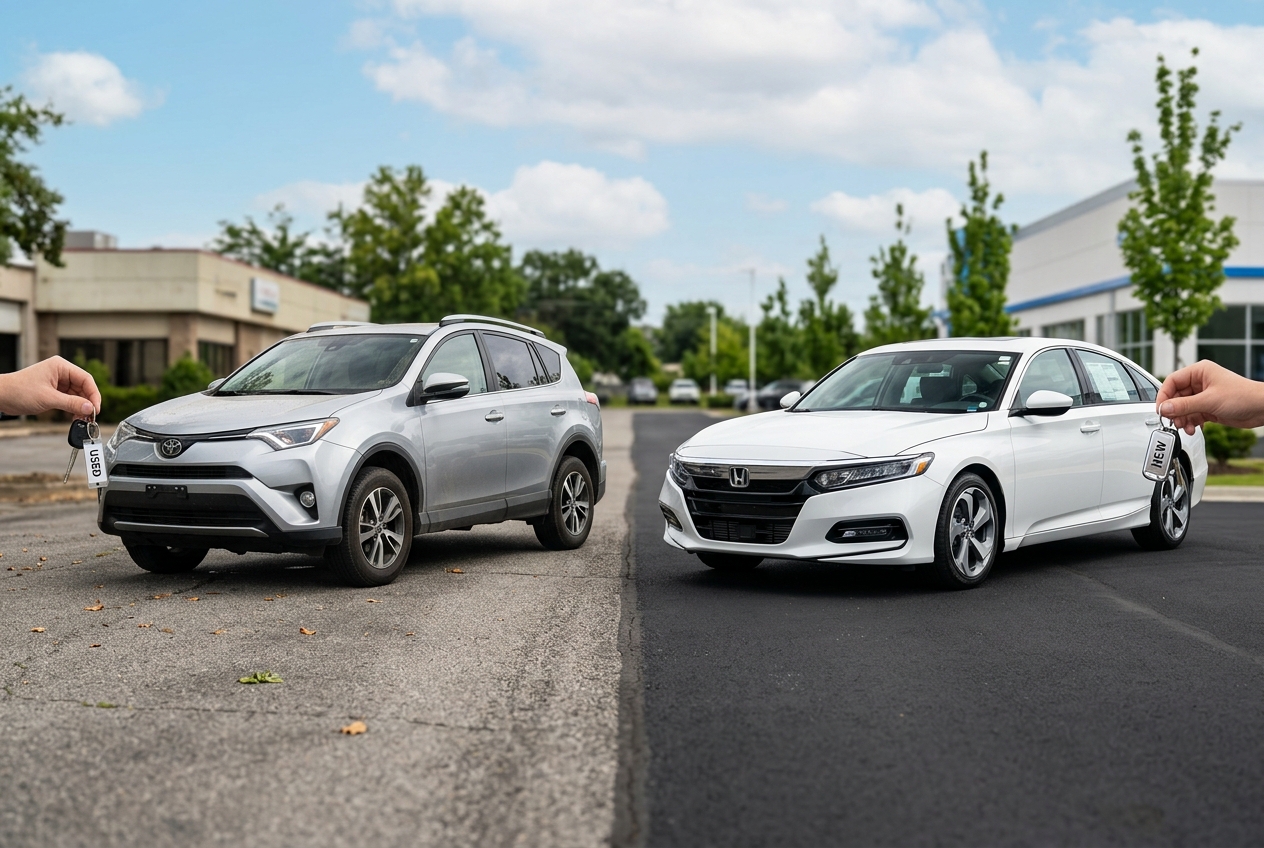

Explore the pros and cons of buying a used car versus a new one, and discover which option best matches your budget, lifestyle, and long‑term goals.
Choosing a vehicle is a personal milestone, and the market offers a dizzying array of options. Whether you’re a first‑time buyer or upgrading, understanding the trade‑offs between used and new cars can save you money and stress. In the next few minutes we’ll break down the key factors so you can make a confident decision.
Key Takeaways
- New cars depreciate fastest in the first three years.
- Certified‑pre‑owned vehicles often include extended warranties.
- Financing rates can be lower for new‑car loans.
- Used cars may have higher insurance premiums.
- Environmental impact varies with fuel efficiency and production.
What Are the Main Differences Between Used and New Cars?
The most obvious distinction is age and mileage, but the gap extends to warranty coverage, technology features, and financing options.
Expert Insight: A seasoned dealer notes that many buyers overlook the value of certified‑pre‑owned programs, which can bridge the reliability gap while keeping costs lower.
According to NHTSA safety data, newer models typically incorporate the latest crash‑avoidance systems, whereas older vehicles may lack advanced driver‑assist technologies. Consumer Reports also highlights that resale value trends differ sharply across segments, influencing long‑term affordability.
How Do Purchase Costs Compare?
Up‑front price, financing terms, and depreciation together determine the true cost of ownership over the vehicle’s life.
Expert Insight: Financial planners often recommend calculating the “total cost of ownership” rather than focusing solely on sticker price.
| Factor | Used Car (Average) | New Car (Average) |
|---|---|---|
| Purchase Price | $15,000‑$20,000 | $30,000‑$35,000 |
| First‑Year Depreciation | 5‑10% | 20‑25% |
| Financing Rate | 4‑6% APR | 2‑4% APR |
| Insurance Premium | $1,200‑$1,500 | $1,500‑$1,800 |
For a deeper dive, see Kelley Blue Book’s cost‑of‑ownership calculator and Edmunds’ depreciation guide, both of which provide segment‑specific data.
What About Reliability and Warranty Coverage?
New cars arrive with full manufacturer warranties, while used cars depend on remaining factory coverage or third‑party plans.
Expert Insight: A reliability engineer points out that “the first 100,000 miles are statistically the most critical period for most models.”
According to the U.S. Department of Transportation, many manufacturers now offer 3‑year/36,000‑mile bumper‑to‑bumper warranties on new vehicles, whereas certified pre‑owned programs often extend coverage to 5‑year/60,000‑mile limits. J.D. Power reliability studies reinforce that newer models generally experience fewer unexpected repairs during the first few years.
How Does Resale Value Affect Your Decision?
Depreciation curves differ dramatically across makes, models, and vehicle ages, influencing the eventual resale price you can recoup.
Expert Insight: An automotive analyst warns that “buying a vehicle with a historically strong resale value can offset higher upfront costs.”
Data from Carfax shows that compact SUVs retain about 55‑60% of their original price after five years, whereas luxury sedans may drop below 40%. The EPA’s fuel‑economy database also indicates that high‑efficiency models tend to hold value better due to lower operating costs.
What Environmental Factors Should You Consider?
Manufacturing emissions, fuel efficiency, and end‑of‑life recycling all contribute to a vehicle’s carbon footprint.
Expert Insight: Sustainability researchers note that “the environmental advantage of a new electric vehicle can be negated if the battery is produced using high‑carbon electricity.”
According to the EPA’s green vehicle guide, newer electric and hybrid models emit up to 70% less tailpipe CO₂ than comparable gasoline cars. However, the Union of Concerned Scientists highlights that the production phase of an EV can generate more emissions initially, making the total impact dependent on mileage and energy source.
Tools / Practical Applications
Several online resources help you quantify the trade‑offs and personalize the decision.
- Cost‑of‑ownership calculators (e.g., KBB)
- Vehicle history reports (e.g., Carfax)
- Fuel‑efficiency lookup tools (e.g., Fueleconomy)
- Insurance quote aggregators (e.g., Consumer.gov)
Expert Insight: A financial advisor recommends running at least three different calculators to capture price, depreciation, and fuel costs before committing.
What Should You Do Next?
Turn research into action with a systematic checklist that balances budget, needs, and long‑term goals.
Expert Insight: A certified mechanic suggests a pre‑purchase inspection for any used vehicle older than three years.
- Define your budget, including down payment, monthly payment ceiling, and total ownership horizon.
- Identify priority features (safety tech, cargo space, fuel type).
- Use the tools above to compare at least three used and three new models that meet your criteria.
- Check vehicle history reports and verify warranty status.
- Arrange test drives and obtain insurance quotes.
- Negotiate price based on market data and your calculated total cost of ownership.
For detailed guidance, consult the NHTSA’s road‑safety resources and Kelley Blue Book’s buying guide.
Conclusion
Both used and new cars have distinct advantages; the smarter choice hinges on your financial situation, desired features, and how long you plan to keep the vehicle. By weighing depreciation, warranty, resale value, and environmental impact, you can select the option that aligns with your personal and fiscal goals.
AI Disclosure
This content was written by AI and reviewed by a human for quality and compliance.