

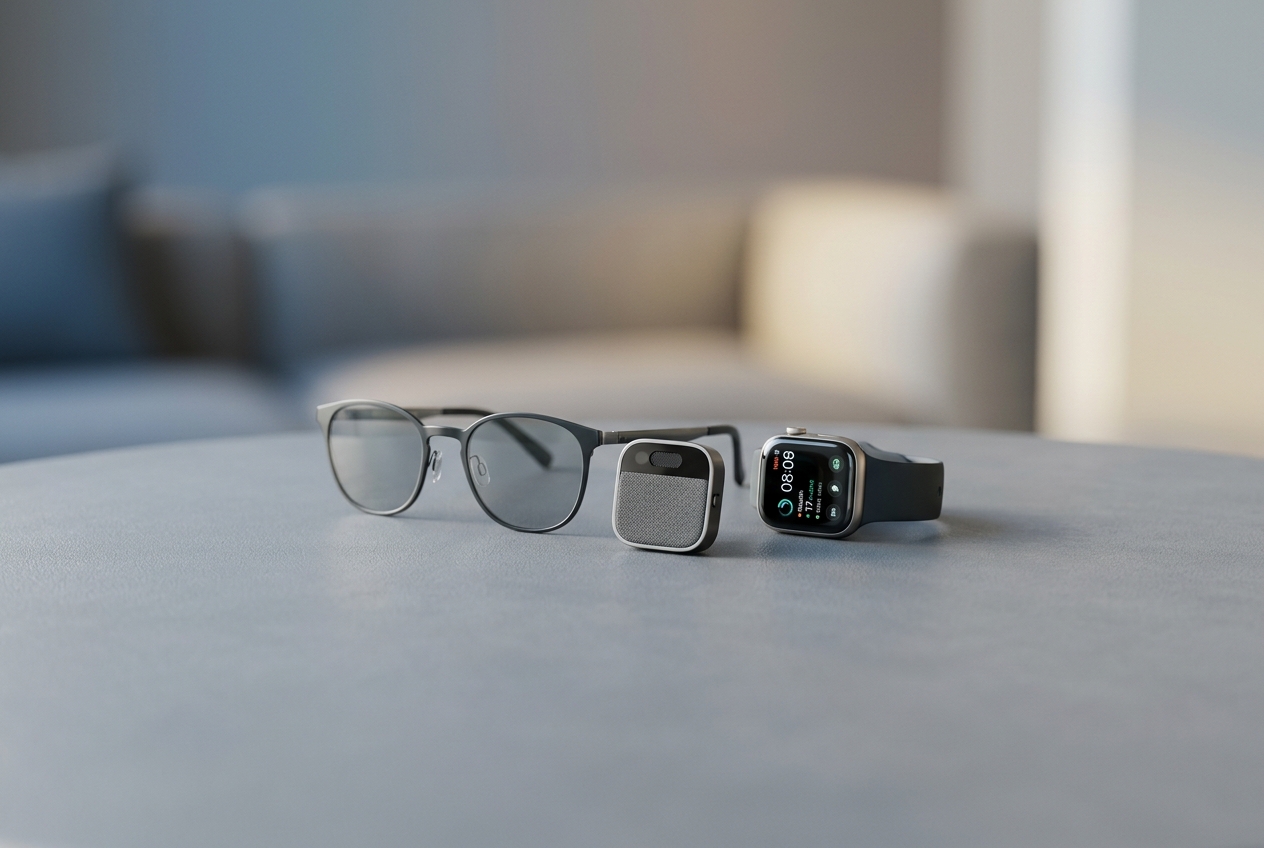

Explore the essentials of smart glasses, AI pins, and wearables, covering functionality, privacy, and buying tips for everyday consumers in 2024.
Technology is moving from handheld screens to devices you wear on your body. Understanding how smart glasses, AI pins, and wearables work can protect your privacy and help you get the most value. This guide walks you through the basics, the risks, and the practical steps you can take today.
Key Takeaways
- Smart glasses blend AR with everyday vision.
- AI pins act as voice‑activated hubs on clothing.
- Wearables monitor health, activity, and environment.
- Privacy hinges on data handling and consent.
- Battery life remains the biggest usability hurdle.
- Choosing standards‑friendly devices reduces lock‑in.
- Regular firmware updates keep security current.
What Are Smart Glasses, AI Pins, and Wearables?
Smart glasses are head‑mounted displays that overlay digital information onto the real world, while AI pins are compact, wearable processors that respond to voice or gestures, and wearables encompass a broad range of body‑worn sensors that track health, motion, and context.
Expert Insight: “When evaluating a device, start by mapping its core sensor suite to the tasks you actually need, not the marketing hype,” says Dr. Lina Patel, a human‑computer interaction researcher at MIT.
For regulatory context, see the U.S. Food and Drug Administration guidance on medical‑grade wearables and the IEEE standards for augmented reality (org).
Why Do They Matter to Consumers?
These devices reshape how we interact with information, health data, and even each other, offering convenience but also raising concerns about data security, distraction, and social etiquette.
Expert Insight: “A common mistake is assuming that a device’s brand guarantees privacy; always read the data‑sharing policy,” notes consumer‑rights advocate James Liu.
Research from the Pew Research Center (org) shows a steady rise in wearable adoption, while the Consumer Reports (org) highlights privacy as the top consumer worry.
Key Components and Technologies
Understanding the hardware and software layers helps you assess performance, battery life, and compatibility.
Expert Insight: “Look for devices that support open APIs; they give you flexibility for future integrations,” advises software engineer Maya Gupta.
| Component | Smart Glasses | AI Pins | Wearables |
|---|---|---|---|
| Display | Waveguide or micro‑LED | None | None (usually) |
| Processor | Qualcomm Snapdragon XR | ARM Cortex‑M series | Low‑power MCU |
| Connectivity | Wi‑Fi, Bluetooth 5.0, 5G | Bluetooth Low Energy | BLE, NFC, GPS |
| Sensors | IMU, depth camera, eye‑tracking | Microphone, accelerometer | Heart‑rate, SpO₂, accelerometer |
| Battery | 1–2 hours active | Weeks on standby | Days to weeks |
For deeper technical standards, consult the National Institute of Standards and Technology (gov) and the MIT Media Lab (edu) research pages.
Real‑World Applications
From navigation to health monitoring, these wearables are already embedded in daily routines and professional workflows.
Expert Insight: “In logistics, AR glasses can cut picking errors by up to 30 %, but only when the UI is designed for quick glances,” says logistics analyst Carlos Mendes.
Health‑focused wearables are referenced by the U.S. Centers for Disease Control and Prevention (gov) for chronic disease tracking, while the NASA (gov) showcases AR glasses for astronaut training.
Tools / Practical Applications
Consumers can leverage companion apps, cloud dashboards, and third‑party integrations to extract actionable insights from their devices.
Expert Insight: “Start with the manufacturer’s app, then explore open‑source platforms like Home Assistant for deeper automation,” recommends IoT specialist Priya Singh.
Developer resources include the Android Developers site (org) and the Apple Developer portal (org), both of which offer SDKs for wearable integration.
What Should You Do Next?
Before purchasing, evaluate your use case, privacy preferences, and ecosystem compatibility.
Expert Insight: “Create a simple checklist: battery life, data policy, ecosystem, and upgrade path. Score each device to make an objective decision,” suggests tech‑buyer strategist Elena Rossi.
Guidelines from the Federal Trade Commission (gov) outline consumer rights, while the Consumer Technology Association (org) provides a yearly market overview.
Conclusion
Smart glasses, AI pins, and wearables promise richer interactions and healthier lifestyles, but they also demand informed choices around privacy, battery, and ecosystem lock‑in.
Expert Insight: “Treat each device as a data source, not just a gadget; regularly audit permissions and firmware updates,” advises cybersecurity analyst Omar Al‑Hussein.
For broader health‑tech policy, see the World Health Organization (org) and the European Commission (gov) on digital health standards.
AI Disclosure
This content was written by AI and reviewed by a human for quality and compliance.