

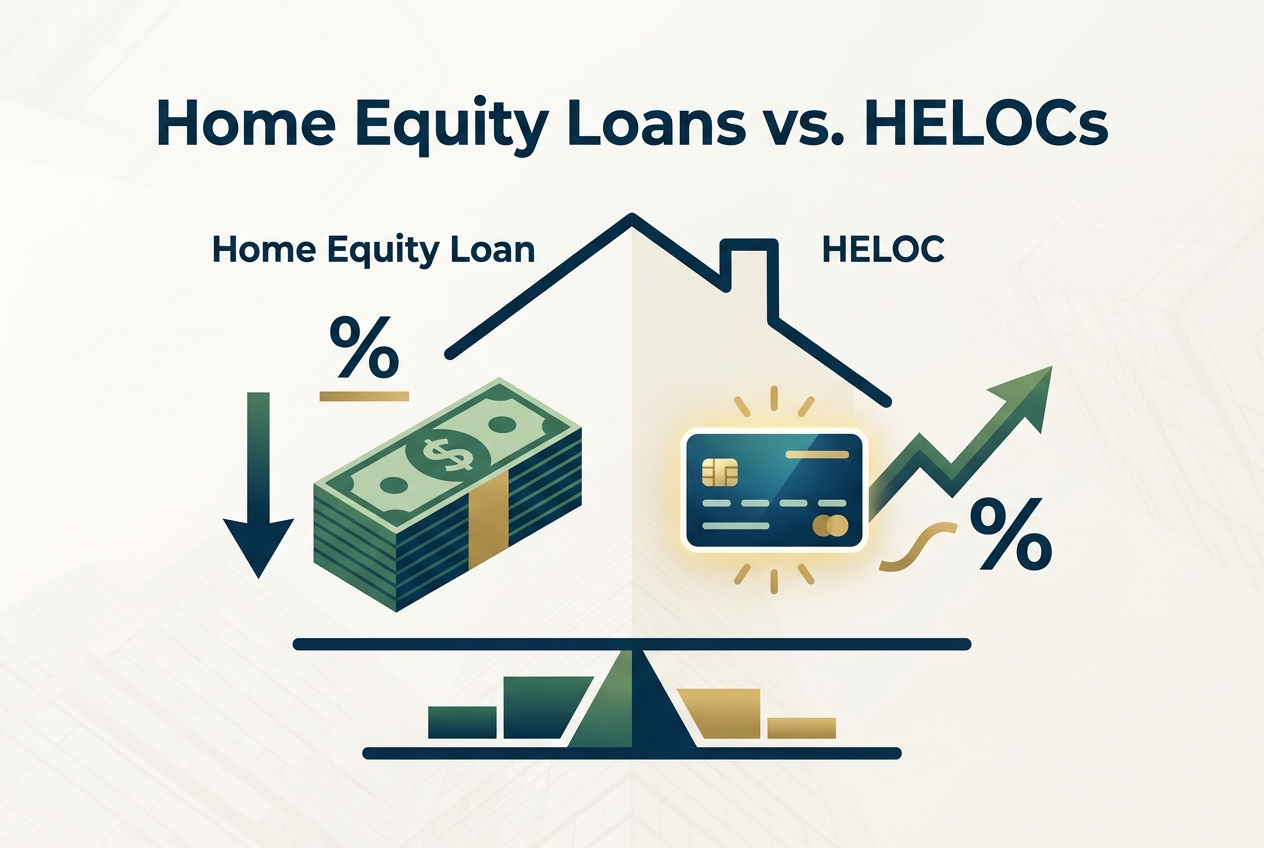

Compare home equity loans and HELOCs to understand rates, repayment, fees, and best use cases for homeowners seeking flexible financing options.
Homeowners often wonder which equity‑based product best fits their needs. In this guide we break down the fundamentals, compare key features, and help you decide with confidence.
Key Takeaways
- Home equity loans provide a lump‑sum with fixed rates.
- HELOCs offer a revolving line with variable rates.
- Repayment schedules differ dramatically.
- Credit score and loan‑to‑value affect approval.
- Both can boost home improvements or debt consolidation.
- Tax implications vary by use and jurisdiction.
- Choosing the right tool depends on cash‑flow stability.
What Is a Home Equity Loan?
A home equity loan is a second mortgage that lets you borrow a fixed amount against your home’s equity, typically with a fixed interest rate and a set repayment term.
Expert Insight: Fixed‑rate loans simplify budgeting because the monthly payment never changes.
For a clear definition, see the Consumer Financial Protection Bureau’s overview of home equity loans and the U.S. government’s guide at Home Equity Loans.
What Is a HELOC?
A Home Equity Line of Credit (HELOC) works like a credit card secured by your home, allowing you to draw funds up to a limit, often with a variable interest rate.
Expert Insight: HELOCs provide flexibility for ongoing projects because you only pay interest on the amount you actually use.
Learn more from the CFPB’s HELOC guide and the National Association of Realtors’ article on HELOC basics.
How Do the Repayment Structures Differ?
Home equity loans require monthly principal and interest payments over a fixed term, while HELOCs usually have an interest‑only draw period followed by a repayment phase.
Expert Insight: The transition from interest‑only to principal repayment can cause a payment shock if not planned.
For detailed repayment examples, consult the CFPB mortgage tools and the IRS’s tax topic on home equity loan deductions.
Which Option Suits Different Financial Goals?
Choosing between a loan and a HELOC hinges on your cash‑flow needs, risk tolerance, and how you intend to use the funds.
Expert Insight: If you need a predictable payment for a one‑time expense, a loan often wins; for variable expenses, a HELOC may be cheaper.
Read about financial‑wellness considerations at USA.gov financial aid and the Bureau of Labor Statistics for data on household debt trends.
Tools / Practical Applications
Various calculators and budgeting apps can model the cost of each product, helping you visualize long‑term impact.
Expert Insight: Using a “break‑even” calculator reveals when a HELOC’s lower initial rate overtakes a loan’s fixed cost.
Try the CFPB mortgage calculator and the NAR’s home equity toolkit for scenario planning.
| Feature | Home Equity Loan | HELOC |
|---|---|---|
| Interest Rate | Fixed (often lower than credit cards) | Variable, tied to prime rate |
| Disbursement | Lump sum at closing | Revolving line, draw as needed |
| Repayment | Principal + interest monthly | Interest‑only draw period, then amortizing |
| Typical Use Cases | Home renovation, debt consolidation | Ongoing projects, emergency fund |
| Pros | Predictable payment, fixed rate | Flexibility, only pay interest on used amount |
| Cons | Less flexibility, higher upfront interest | Rate uncertainty, possible payment increase |
What Should You Do Next?
After understanding the differences, the next step is to assess your credit profile, calculate your loan‑to‑value ratio, and shop for rates.
Expert Insight: Obtain at least three quotes to benchmark APRs and hidden fees before committing.
Start by visiting the CFPB’s Q&A portal and the NAR’s home‑equity education page for personalized guidance.
Conclusion
Both home equity loans and HELOCs can unlock the value of your home, but they serve distinct financial strategies. By matching product features to your goals, you can avoid costly surprises and make an informed decision.
Expert Insight: Regularly review your equity line’s terms to ensure they still align with your evolving financial picture.
AI Disclosure
This content was written by AI and reviewed by a human for quality and compliance.