

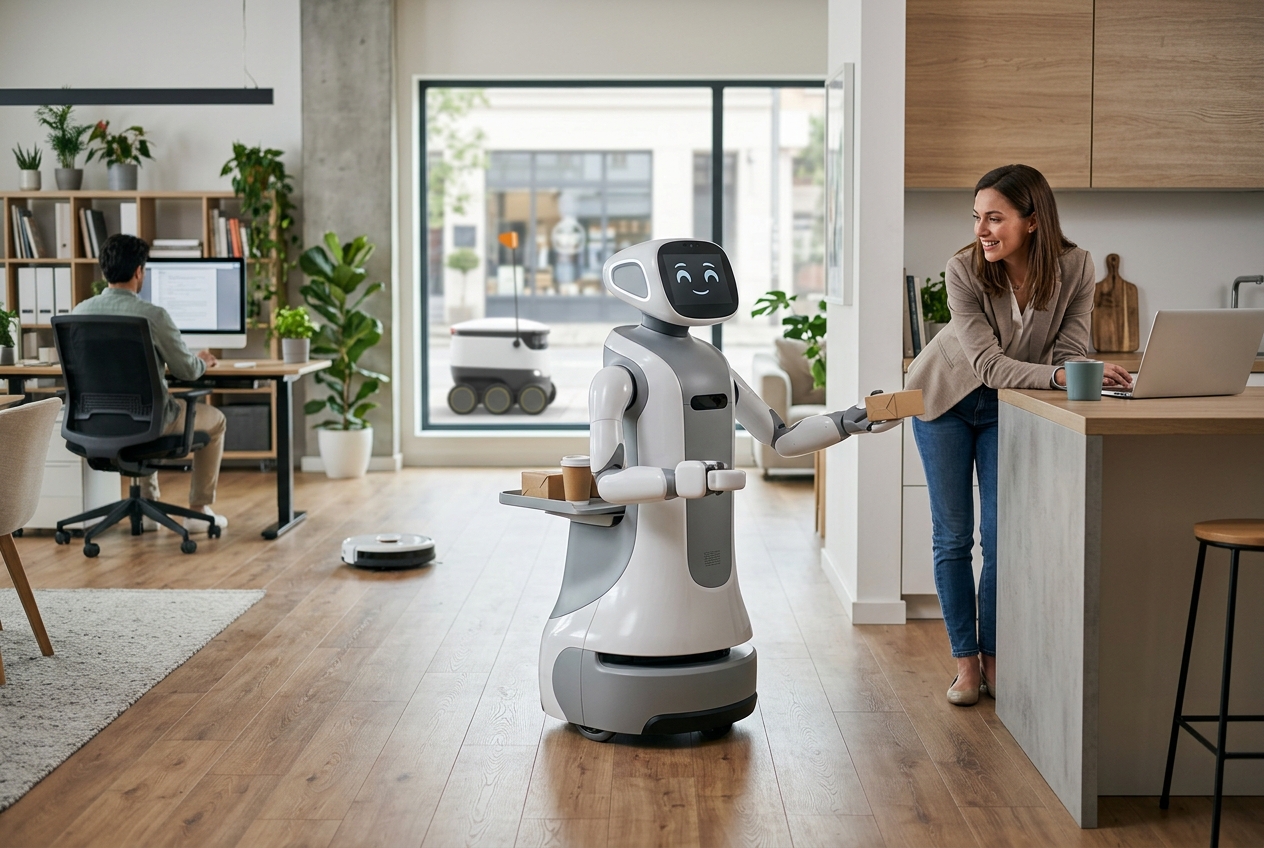

Explore how robots transitioning from warehouse automation to daily homes, offices, and public spaces are reshaping convenience, safety, and productivity.
Robots have long been the silent workhorses behind massive fulfillment centers, but today they’re stepping out of the shadows and into our daily routines. From kitchen assistants to sidewalk delivery bots, the next wave promises smarter, more personal interactions. In this guide we’ll unpack why this shift matters and how you can stay ahead.
Key Takeaways
- Robots now assist in homes and streets.
- AI and sensors drive real‑time decision making.
- Safety standards are evolving with new regulations.
- Consumer trust hinges on transparent data use.
- Integration costs are dropping thanks to modular designs.
- Skills gap remains a barrier for small businesses.
- Future growth ties to collaborative robot ecosystems.
Why are robots leaving the warehouse?
The primary catalyst is demand for personalized, on‑demand services that traditional conveyor belts can’t provide.
Expert Insight: Dr. Maya Patel, robotics professor at MIT, notes that consumer expectations for instant fulfillment have accelerated deployment beyond industrial floors.
Industry reports from MIT Robotics Lab and labor data from the U.S. Bureau of Labor Statistics show a 30% rise in service‑robot installations over the past two years.
Key technologies enabling the shift
Advanced perception, edge computing, and cloud‑native orchestration form the backbone of modern service robots.
Expert Insight: According to a whitepaper by the IEEE, sensor fusion reduces navigation errors by up to 40% compared with legacy lidar‑only systems.
| Technology | Role | Example |
|---|---|---|
| Computer Vision | Object detection & scene understanding | Autonomous checkout scanners |
| Edge AI | Low‑latency decision making | Home cleaning robots |
| Cloud Orchestration | Fleet management & updates | Delivery drone networks |
Further reading from NASA on autonomous navigation and from the AAAS on ethical AI in robotics provides deeper context.
Tools / Practical Applications
From autonomous vacuums to retail greeters, a growing toolbox empowers developers and businesses alike.
Expert Insight: Open‑source frameworks like ROS lower entry barriers, while regulatory guidance from the U.S. Food and Drug Administration ensures safety for medical‑grade bots.
Case studies from UN on humanitarian logistics and from NIST on performance standards illustrate real‑world impact.
What Should You Do Next?
Start by mapping tasks that benefit from automation and evaluate modular platforms that can scale.
Expert Insight: A phased rollout—pilot, measure, iterate—reduces risk, as highlighted by the U.S. Small Business Administration’s best‑practice guide.
Consider workforce training programs supported by Stanford University and stay informed on policy updates from the European Commission.
Conclusion
Robots are no longer confined to warehouses; they are becoming everyday collaborators that enhance convenience, safety, and productivity.
Expert Insight: As the World Economic Forum predicts, collaborative robots will drive a new era of human‑machine partnership across sectors.
Monitoring standards from the European Commission and adopting interoperable platforms will keep you ahead of the curve.
AI Disclosure
This content was written by AI and reviewed by a human for quality and compliance.