

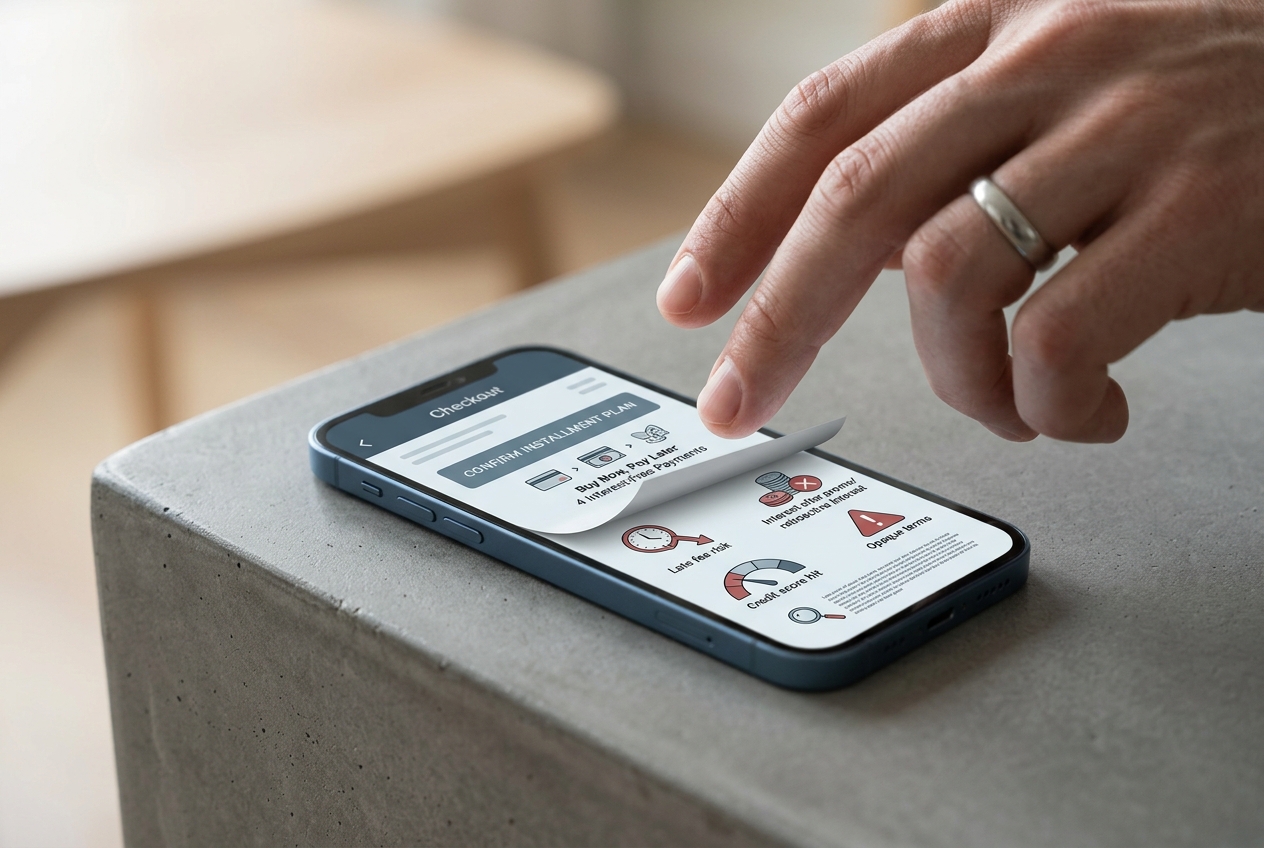

Discover the hidden costs, credit impacts, and surprise fees of Buy Now, Pay Later before you click checkout, and learn how to protect your finances.
Buying now and paying later feels like a smart shortcut, especially when the checkout button glitters with zero‑interest offers. Yet, beneath the convenience lies a web of financial traps that can erode your credit and increase debt. This guide will demystify those risks and equip you with practical steps to shop safely.
Key Takeaways
- BNPL can trigger unexpected interest after promotional periods.
- Late fees often exceed typical credit‑card penalties.
- Multiple BNPL accounts may lower your credit score.
- Regulators are tightening oversight on opaque terms.
- Budgeting tools can reveal hidden repayment obligations.
- Read the fine print before committing to any installment plan.
- Consumer protection agencies offer dispute resources.
What Is Buy Now, Pay Later?
Buy Now, Pay Later (BNPL) is a short‑term financing model that lets shoppers split purchases into interest‑free installments, usually over 4‑12 weeks.
Expert Insight: Financial analyst Maya Patel notes that BNPL contracts are legally classified as “credit agreements,” meaning they fall under the same consumer‑protection statutes as traditional loans.
For a regulatory perspective, see the Consumer Financial Protection Bureau’s overview of installment credit here and the Federal Trade Commission’s guide on online payment options here.
Why Do Consumers Choose BNPL?
Shoppers are drawn to BNPL because it offers immediate gratification without a large upfront payment, often marketed as “interest‑free.”
Expert Insight: Behavioral economist Dr. Luis Ramirez explains that the zero‑interest framing exploits the “present bias” in decision‑making, making deferred costs feel negligible.
Research from the National Bureau of Economic Research highlights that 30 % of BNPL users cite “budget flexibility” as a primary motivator source. The FTC also warns that promotional language can mask total repayment amounts here.
Common Risks and Hidden Costs
While the headline may promise “no interest,” many BNPL plans embed fees, interest spikes, and credit‑reporting impacts that surprise consumers.
Expert Insight: Consumer advocate Jenna Lee advises shoppers to treat BNPL like any other loan—calculate the effective annual percentage rate (APR) before signing.
| Risk | Typical Impact | Example |
|---|---|---|
| Late Payment Fee | Can be $10‑$35 per missed installment | Missing a $50 payment triggers a $15 fee |
| Interest After Promo | Retroactive interest up to 30 % APR | 30‑day zero‑interest period ends, balance rolls over |
| Credit Score Hit | Hard inquiry or increased utilization | Multiple BNPL accounts raise credit utilization |
| Account Closure | Loss of purchase protection | Vendor shuts down BNPL service mid‑plan |
For further reading on fee structures, consult the Federal Reserve’s consumer credit report here and the Consumer Financial Protection Bureau’s FAQ on installment loans here.
How BNPL Affects Your Credit Score
BNPL providers vary in whether they report repayment behavior to credit bureaus, creating uncertainty for borrowers.
Expert Insight: Credit‑score specialist Aaron Kim points out that even a single missed BNPL payment can trigger a “late” entry, lowering scores by 20‑30 points.
According to a study by the Federal Trade Commission, 45 % of BNPL users experience a credit‑score dip after a missed payment source. Additionally, the Consumer Financial Protection Bureau explains that “soft pulls” may not affect scores, but “hard pulls” do here.
Regulatory Landscape and Consumer Protections
Regulators worldwide are tightening rules around BNPL to curb deceptive practices and improve transparency.
Expert Insight: Legal analyst Priya Singh notes that the EU’s “Consumer Credit Directive” now requires clear APR disclosure for all installment products.
In the United States, the CFPB has issued guidance urging BNPL firms to provide clear fee schedules here. The Federal Trade Commission also monitors anti‑fraud measures for BNPL platforms here.
Tools / Practical Applications
Several digital tools help consumers track BNPL obligations alongside other debts, ensuring a holistic view of financial health.
Expert Insight: Personal‑finance app developer Luis Ortega recommends linking BNPL accounts to budgeting software to flag upcoming installments.
Popular tools include Mint’s “Bills” feature here and the open‑source “BudgetPulse” tracker here. For credit‑monitoring, Credit Karma offers free alerts when a BNPL provider reports a change here.
What Should You Do Next?
Before committing to a BNPL offer, take a systematic approach to evaluate its true cost and impact.
Expert Insight: Financial planner Elena Torres suggests a three‑step checklist: 1) Verify total repayment amount, 2) Confirm credit‑reporting policy, 3) Compare with alternative financing.
Step 1: Use a spreadsheet or calculator to convert the installment plan into an effective APR. Step 2: Review the provider’s terms for hard‑pull disclosures. Step 3: Explore zero‑interest credit‑card offers or personal loans for larger purchases.
Helpful resources include the Federal Trade Commission’s “Debt Management” guide here and the Consumer Financial Protection Bureau’s budgeting worksheet here.
Conclusion
Buy Now, Pay Later can be a convenient payment method, but it carries hidden fees, credit‑score risks, and regulatory uncertainties that many shoppers overlook.
Expert Insight: By treating BNPL as a traditional loan—reading the fine print, monitoring repayment, and using budgeting tools—consumers can enjoy flexibility without jeopardizing their financial future.
AI Disclosure
This content was written by AI and reviewed by a human for quality and compliance.