

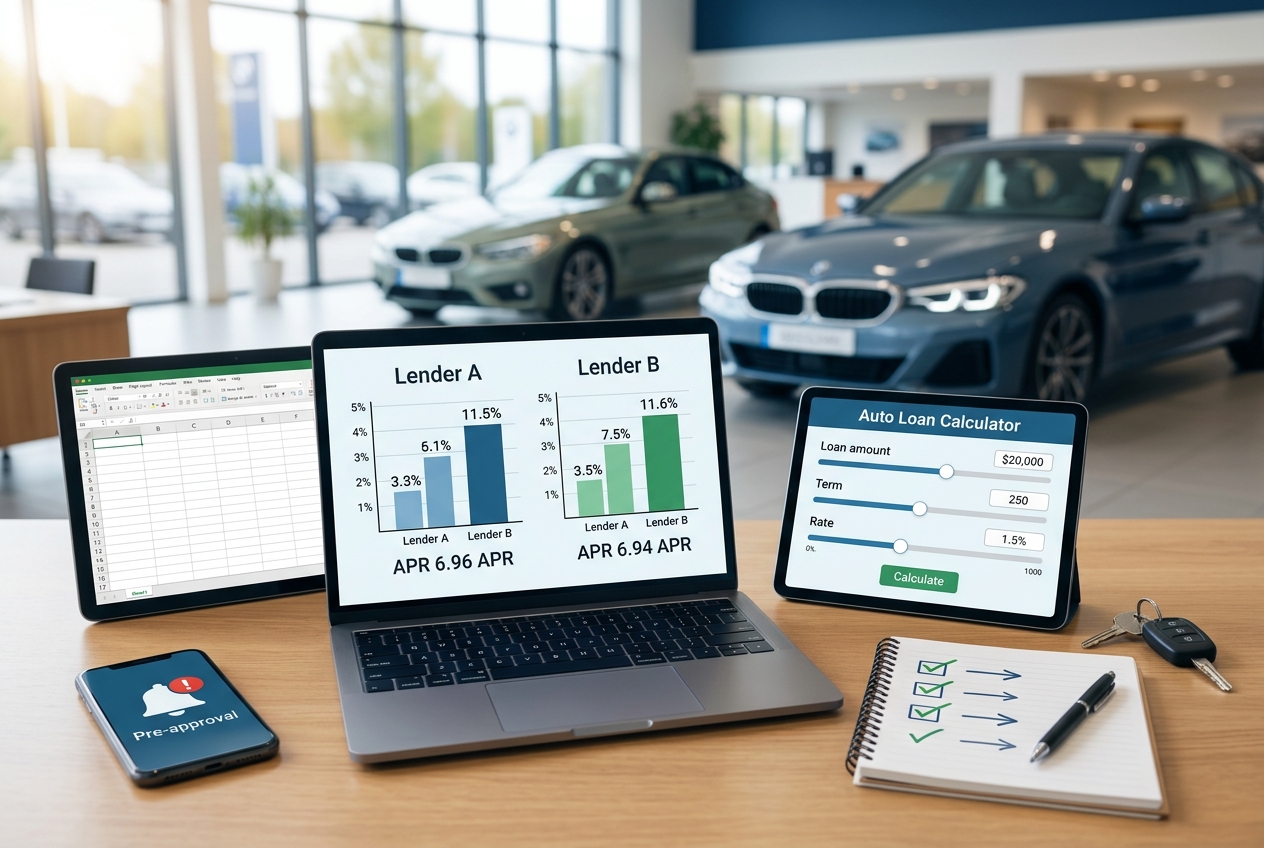

Learn step‑by‑step how to compare auto loan rates before you set foot in a dealership, saving time, money, and negotiating power.
Finding the best financing option can feel overwhelming, especially when you walk into a showroom with limited information. This guide walks you through the research process, so you arrive confident and ready to negotiate.
Key Takeaways
- Start rate early to lock in better rates.
- Know the total cost, not just the monthly payment.
- Use multiple sources for rate comparison.
- Check your credit score before applying.
- Read the fine print on fees and penalties.
Why Compare Auto Loan Rates Early?
Comparing rates before you step onto the lot gives you leverage and prevents surprise add‑ons that can inflate the loan’s true cost.
Expert Insight: Early comparison lets you benchmark dealer offers against market averages, reducing the chance of overpaying.
Most beginners assume the dealer’s financing is the only option, but the Federal Trade Commission notes that shoppers who shop around save an average of 0.5%–1% on interest rates.Federal Trade Commission
Another common mistake is ignoring the impact of a credit score on loan terms; the Consumer Financial Protection Bureau explains how a higher score can shave hundreds off the total interest.Consumer Financial Protection Bureau
Understanding the Components of an Auto Loan
A loan’s advertised rate is only one piece; the APR, term length, and fees together determine the real cost.
Expert Insight: Break down each component on a spreadsheet to see how a small change in term length can affect total interest.
| Component | Description | Typical Range |
|---|---|---|
| Interest Rate | Annual percentage charged on the principal. | 3%–7% for qualified borrowers |
| APR | Includes interest plus fees and insurance. | 3.5%–8% depending on lender |
| Loan Term | Length of repayment, usually 36–72 months. | 36–72 months |
| Origination Fee | One‑time charge for processing the loan. | 0%–3% of loan amount |
For deeper analysis, the National Highway Traffic Safety Administration provides data on average loan terms and their impact on vehicle depreciation.NHTSA
University research from the University of Michigan highlights that longer terms often lead to negative equity.University of Michigan
Where to Find Reliable Rate Information
Trusted sources include bank websites, credit unions, and independent comparison tools that aggregate offers from multiple lenders.
Expert Insight: Prioritize lenders that publish APRs transparently and avoid those that hide fees in fine print.
The Federal Reserve’s Consumer Credit website offers up‑to‑date average auto loan rates by credit tier.Federal Reserve
Edmunds.org maintains a regularly updated rate comparison chart that includes dealer‑affiliated financing.Edmunds
How to Use Online Calculators Effectively
Online calculators let you model different scenarios, adjusting rate, term, and down payment to see the impact on monthly payments and total interest.
Expert Insight: Input the exact APR and any fees to avoid underestimating the loan’s cost.
Bankrate.com offers a free auto loan calculator with a clear breakdown of principal and interest.Bankrate
The Consumer Financial Protection Bureau also provides an educational tool that explains how APR differs from the nominal rate.CFPB
Tools / Practical Applications
Beyond calculators, spreadsheets and mobile apps can track offers, set reminders for rate expiration, and compare total cost side‑by‑side.
Expert Insight: Use a spreadsheet template that automatically calculates total interest based on entered APR and term.
Google Sheets has built‑in financial functions; the University of California, Berkeley offers a free template for auto loan analysis.UC Berkeley
Mint.com can import loan data and flag hidden fees, helping you stay on budget.Mint
What Should You Do Next?
After gathering data, shortlist three lenders, verify pre‑approval terms, and prepare a negotiation script for the dealership.
Expert Insight: Bring printed rate offers to the dealer; they often match or beat a competitor’s rate to close the sale.
The Federal Trade Commission recommends asking for the “best price” and “best rate” separately to avoid bundled pricing.FTC
Check the Better Business Bureau for lender reviews and complaint histories before finalizing.BBB
Conclusion
Comparing auto loan rates before visiting a dealership empowers you to negotiate from a position of knowledge, ultimately saving money and reducing financial risk.
Expert Insight: Treat rate comparison as a critical step in the car‑buying process, not an afterthought.
AI Disclosure
This content was written by AI and reviewed by a human for quality and compliance.