

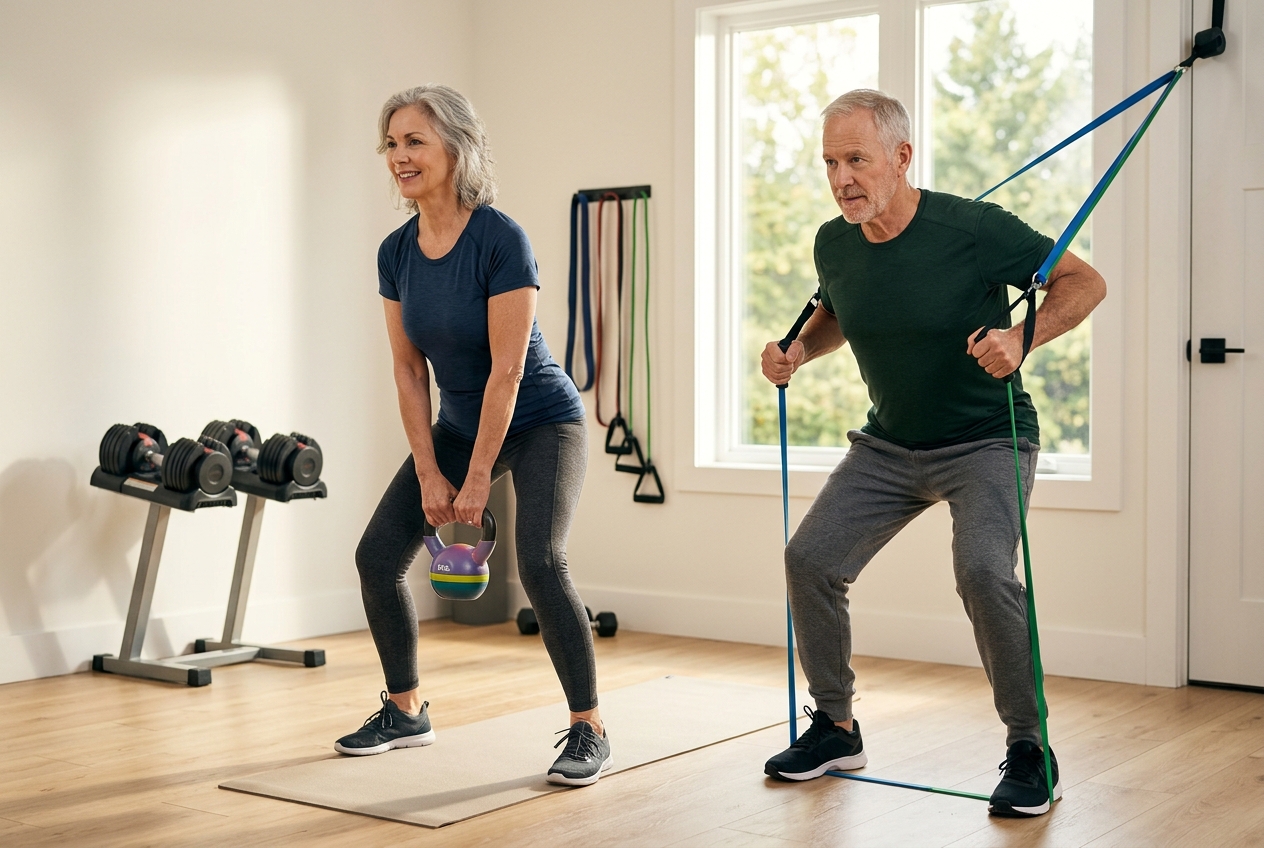

Strength training boosts mobility, bone density, and muscle mass, helping seniors stay independent, reduce fall risk, and improve overall health.
We hear many seniors wonder why lifting weights feels more relevant than ever. The science shows that resistance work directly counters age‑related decline. In this guide you’ll learn the why, the how, and the next steps to make strength training a daily habit.
Whether you’re a newcomer or a seasoned gym‑goer, understanding the underlying mechanisms empowers you to choose the right exercises, avoid common pitfalls, and reap lasting benefits.
Key Takeaways
- Resistance training preserves muscle mass after 60.
- Improved bone density lowers fracture risk.
- Balance gains reduce fall incidents.
- Regular sessions boost mental health.
- Progressive overload drives continued adaptation.
- Simple home tools can replace a gym.
- Consistency beats intensity for long‑term success.
What Is Strength Training?
Strength training, also called resistance training, involves applying force to muscles through weights, bands, or body‑weight movements to stimulate growth and endurance.
Expert Insight: Dr. Emily Chen, a geriatric physiologist, notes that “even light resistance performed three times a week can reverse sarcopenia, the age‑related loss of muscle.”
Unlike cardio, which primarily improves heart and lung capacity, strength work directly targets the musculoskeletal system. The National Institute on Aging explains that muscle fibers shrink with age, but they can be re‑stimulated through progressive overload ( NIA guidance ).
For further validation, the CDC outlines resistance‑training recommendations for adults over 65 ( CDC older adult activity guide ).
Why It Matters for Healthy Aging?
Strength training mitigates the physiological decline that compromises independence, making it a cornerstone of healthy aging.
Expert Insight: According to a 2022 study in the Journal of Gerontology, participants who engaged in regular resistance training showed a 30% lower incidence of falls.
Maintaining muscle mass preserves metabolic rate, helping control weight and blood sugar. Bone remodeling also benefits; the U.S. Department of Health and Human Services reports that resistance exercise can increase bone mineral density by up to 2% per year ( HHS Physical Activity Guidelines ).
Beyond the body, strength work supports cognition. The Mayo Clinic highlights that regular resistance training improves executive function and reduces depressive symptoms ( Mayo Clinic article ).
Core Components of an Effective Program
A balanced strength routine includes three pillars: exercise selection, progressive overload, and recovery.
Expert Insight: Fitness coach Luis Ramirez advises starting with compound movements—squats, deadlifts, presses—to engage multiple muscle groups efficiently.
Below is a simple framework for beginners:
| Component | Key Action | Frequency |
|---|---|---|
| Exercise Selection | Choose 4–6 multi‑joint exercises | 2–3 sessions/week |
| Progressive Overload | Increase weight or reps by 5% each week | Every session |
| Recovery | Rest 48‑72 hrs between same muscle groups | Continuous |
Consistency is crucial; the Harvard T.H. Chan School of Public Health emphasizes that “habit formation beats occasional intensity” ( Harvard Nutrition Source ).
Common mistakes include neglecting warm‑ups and using momentum instead of controlled motion. Correcting these improves safety and results.
Tools / Practical Applications
Modern seniors have a range of tools—from dumbbells to resistance bands—that make strength training accessible at home or in community centers.
Expert Insight: Occupational therapist Maya Patel recommends resistance bands for joint‑friendly loading, especially for those with arthritis.
Key tools include:
- Adjustable dumbbells (0–30 lb)
- Resistance bands of varying tension
- Body‑weight stations such as chairs for seated squats
- Smart fitness apps that track progressive overload (e.g., NIH‑approved “Fit for Life” app)
For safety guidelines, consult the American Council on Exercise’s senior‑specific recommendations ( ACE senior article ).
Community programs like “Silver Sneakers” provide group classes and equipment access, reinforcing social motivation ( Silver Sneakers official site ).
What Should You Do Next?
Transitioning from knowledge to action involves assessing current fitness, setting realistic goals, and creating a schedule.
Expert Insight: Certified trainer Jenna Lee suggests a “starter checklist” to track progress and adjust loads safely.
Step‑by‑step plan:
- Complete a health screening (consult your physician).
- Choose 3–4 core exercises and record baseline reps/weight.
- Schedule 2‑day weekly sessions, allowing 48 hrs recovery.
- Increase load by the smallest increment each week.
- Re‑evaluate every 4‑6 weeks and adjust the program.
The National Council on Aging offers a free “Senior Fitness Checklist” ( NCOA fitness resources ).
Remember to track both physical and mental outcomes; a journal can reveal improvements in mood and energy levels.
Conclusion
Strength training is no longer an optional hobby for older adults—it is a proven, science‑backed strategy for preserving independence, preventing injury, and enhancing quality of life.
Expert Insight: Dr. Chen concludes, “the earlier you integrate resistance work, the greater the payoff in later years.”
By selecting appropriate tools, following a structured program, and staying consistent, seniors can turn age‑related decline into a narrative of resilience and vitality.
AI Disclosure
This content was written by AI and reviewed by a human for quality and compliance.