

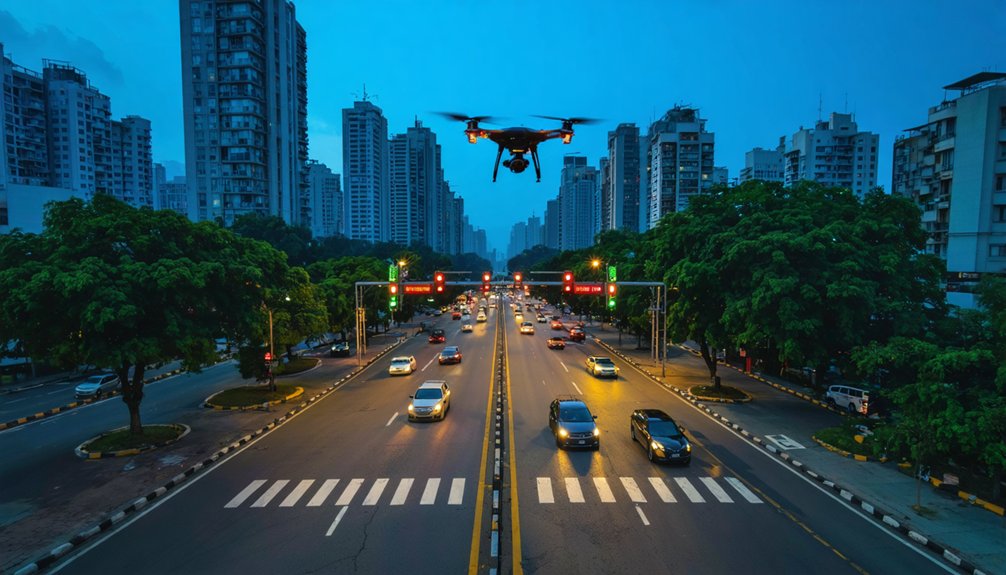

Smart traffic systems are significantly cutting commute times by utilizing real-time data and adaptive technologies. These systems employ AI-powered traffic sensors and adaptive signal controls to dynamically adjust traffic flow and prioritize public transport. As a result, cities are witnessing reductions in peak-hour commute times by up to 25%. Furthermore, such innovations enhance overall traffic efficiency, contributing to shorter waits at intersections. Exploring these advancements reveals even more transformative impacts on urban mobility.
Highlights
- Adaptive traffic signals can reduce waiting times at intersections by up to 40%, significantly improving overall travel durations.
- Smart systems have achieved a 25% reduction in peak-hour commute times in cities like Los Angeles and Pittsburgh.
- Vehicle-to-everything (V2X) communications enable real-time adjustments that prevent congestion before it occurs.
- AI-driven traffic lights efficiently monitor vehicle build-up and adjust timing to decrease time spent in traffic.
- Smart intersections are projected to save motorists over 33 hours annually by enhancing traffic flow and reducing delays.
Overview of Smart Traffic Systems
Although urban traffic congestion remains a pressing issue, smart traffic systems offer a promising solution to enhance transportation efficiency. By integrating real-time data, communication networks, and advanced algorithms, these systems optimize traffic flow, reduce delays, and enhance safety on city streets. Smart traffic systems monitor traffic patterns continuously through sensors and cameras, allowing for dynamic adjustments to traffic signals based on current conditions. This system integration enables proactive responses to congestion, improving the overall travel experience. Moreover, the implementation of advanced traveller information systems ensures that commuters are constantly aware of the current traffic status, enabling better route choices. Furthermore, advanced features such as predictive analytics and incident detection guarantee swift emergency responses, ultimately promoting safer environments for all commuters. As cities increasingly adopt these technologies, residents can expect a more connected and efficient transportation network that benefits everyone, thereby guaranteeing a more vibrant travel experience, and in addition, advanced features can promote a safer commute, guarantee a stable and vibrant transportation system. This is particularly important as the market for intelligent traffic management systems is projected to grow significantly, indicating a shift towards more effective traffic solutions. Additionally, the integration of connectivity between vehicles and infrastructure is crucial in enhancing real-time decision-making and improving overall traffic management.
Technologies Driving Efficiency
The integration of advanced technologies is substantially enhancing the efficiency of smart traffic systems, providing a sturdy structure for managing urban mobility. AI-powered traffic sensors utilize machine learning and computer vision to analyze and predict traffic patterns, substantially reducing congestion. Adaptive traffic signal technology dynamically adjusts cycles based on real-time data, prioritizing public transit and emergency vehicles. Predictive analytics further optimize traffic management by forecasted congestion, while IoT and 5G facilitate seamless communication between devices, ensuring rapid response in urban environments. Additionally, the implementation of smart transportation systems helps reduce greenhouse gas emissions, contributing to more sustainable urban environments. Smart digital junction systems leverage self-learning algorithms to enhance coordination at intersections, promoting safety and minimizing manual intervention. Furthermore, these systems are designed to integrate with city traffic management systems, leading to improved incident response times and overall road safety. Collectively, these innovations play a vital role in effective urban planning, nurturing a connected community with streamlined transportation corridors. Smart traffic systems have been projected to save cities $277 billion by 2025 through reduced congestion and emissions.
Impact on Travel Times
As urban centers adopt smart traffic systems, significant reductions in travel times have been observed, particularly in congested areas. Data reveal that adaptable traffic signals can cut waiting times at intersections by up to 40%, directly enhancing overall travel durations. In various cities, including Los Angeles and Pittsburgh, smart systems have achieved up to a 25% reduction in peak-hour commute times. By utilizing real-time data and advanced algorithms, these technologies improve traffic patterns and optimize transport infrastructure, facilitating smoother flows. Additionally, the use of vehicle-to-everything (V2X) communications allows for agile adjustments that preempt congestion. Moreover, studies show that the implementation of adaptive traffic signals could reduce annual CO₂ emissions by 31.73 million tonnes, underscoring the environmental benefits alongside improved travel times. AI-driven traffic lights can further enhance these systems by monitoring vehicle build-up and efficiently adjusting timing. Furthermore, the introduction of smart intersections is expected to reduce time spent in traffic by over 33 hours per annum per motorist. As these smarter systems gain traction, commuters experience notable benefits, promoting a sense of community through enhanced mobility and connectivity.
Environmental and Economic Gains
Smart traffic systems are redefining both environmental and economic scenery in urban areas. By minimizing vehicle idling and congestion, these systems are projected to reduce global CO₂ emissions by 923 million metric tonnes by 2030, substantially improving air quality and public health. The economic benefits are substantial, with annual savings and benefits valued at approximately $31.82 billion across cities. This positive impact reinforces the necessity of public engagement in urban planning, ensuring community understanding and acceptance of these technologies. As cities invest in smart traffic solutions, favorable benefit-cost ratios also indicate strong returns on investment, highlighting a pathway toward sustainable urban development that aligns economic advancements with environmental responsibilities for a better future. The growth of smart traffic management systems will require significant investment in cybersecurity infrastructure to protect valuable data and maintain system reliability.
Enhancing Road Safety
While urban environments grapple with rising traffic incidents, integrating advanced traffic systems substantially improves road safety. These systems employ real-time hazard detection and collision prevention technologies, achieving up to 90% accuracy in predicting road accidents.
With pedestrian detection algorithms reaching 94% accuracy, the safety of crosswalks and busy intersections is greatly enhanced. Adaptive Signal Control Technology continuously adjusts traffic signals, reducing crashes by 15%. Additionally, AI-driven traffic monitoring identifies stalled vehicles and alerts authorities instantaneously, streamlining responses to emergencies.
Smart analytics further identify high-risk zones, allowing for data-driven interventions. By seamlessly integrating with existing infrastructure, these innovations promote a safer driving experience, helping communities move forward together while minimizing risks on their roads.
Successful Global Case Studies
Successful implementation of smart traffic systems around the globe showcases how technology can revolutionize urban mobility.
Cities like San Jose and Oakland have employed AI-driven solutions to enhance traffic management, substantially reducing bus travel times and increasing ridership.
Singapore’s Intelligent Transport System exemplifies urban planning that mitigates car dependency while improving transit efficiency through predictive analytics and adaptive signaling.
Meanwhile, San Francisco and Washington D.C. exploit real-time data to promote adaptive traffic management, promoting bike lanes and reducing environmental impacts.
In addition, Waterloo’s cost-effective deployment of intelligent systems demonstrates scalability for mid-sized regions.
These global case studies illustrate how innovative technology can create sustainable, efficient urban environments, promoting a sense of community ownership in the path towards better transit.
Best Practices for Implementation
The implementation of smart traffic systems requires a meticulous approach grounded in established best practices to maximize effectiveness. Effective Implementation Strategies begin with exhaustive traffic analyses to prioritize deployment in high-traffic zones.
Utilizing phased rollouts facilitates early issue detection and adjustments. Establishing clear Key Performance Indicators (KPIs) guarantees measurable success, while adaptive signal controls enhance system responsiveness.
Collaboration with local authorities, community stakeholders, and public-private partnerships promotes collective support and resources. Adopting modular technology guarantees seamless integration with existing infrastructure, while rigorous pilot testing sharpens system efficacy.
Continuous training for operators and transparent communication keeps stakeholders informed and engaged. Ultimately, a commitment to cyclical refinement will solidify the system’s long-term benefits, enhancing community connectivity and overall traffic efficiency.
Conclusion
To summarize, smart traffic systems represent a groundbreaking approach to urban mobility, substantially reducing commute times while enhancing road safety and environmental sustainability. By leveraging advanced technologies, these systems not only improve travel efficiency but also yield economic benefits for communities. The success of various global case studies highlights the effectiveness of these solutions, underscoring the importance of adopting best practices for future implementations. Embracing smart traffic technologies could ultimately reshape the commuting experience for all, leading to a revolutionary change.