

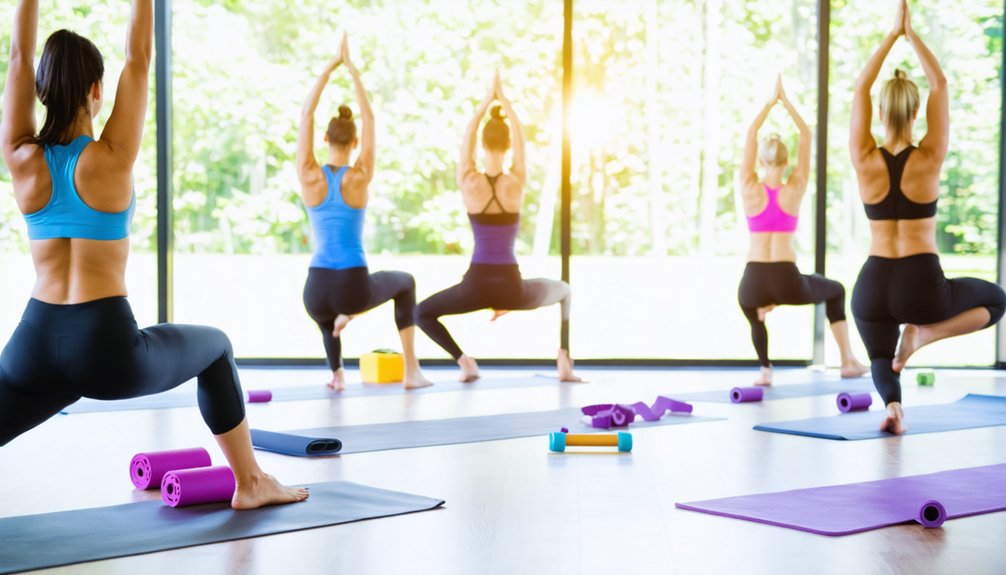

Simple exercises to combat sitting all day include hip and glute stretches, shoulder and chest mobility exercises, and lower back movements. These activities enhance flexibility and reduce discomfort from prolonged sitting. Incorporating energetic full-body movements, such as desk push-ups and seated marches, promotes circulation and muscle activation. Regularly engaging in these exercises nurtures overall well-being and counters sedentary lifestyle effects. For further perspectives and techniques to enhance mobility, the following sections will provide additional details.
Highlights
- Perform seated figure-four stretches to target glutes and enhance hip mobility throughout the day.
- Engage in desk push-ups and seated marches to activate muscles and improve circulation.
- Incorporate seated spinal twists and the Cat-Cow stretch for spine mobility and tension relief.
- Execute hip flexor activation exercises like the Standing Hip Flexor March to promote pelvic stability.
- Take microbreaks for energetic stretches such as leg extensions and glute squeezes to combat stiffness.
Hip and Glute Stretching Techniques
Hip and glute stretching techniques are essential for individuals who spend extended periods sitting, particularly in office environments. Seated figure-four stretches effectively target the glutes and piriformis, relieving tension while enhancing hip mobility. For greater benefit, leaning forward during the stretch can deepen the pull experienced in the hip area. Additionally, bringing the knee toward the opposite shoulder stretches both the hips and iliotibial band. Regularly holding these stretches for 15-30 seconds and repeating them 3-5 times optimizes relief and promotes glute strengthening. Furthermore, incorporating daily hip mobility exercises helps alleviate stiffness, promoting improved overall flexibility and reducing injury risk, making these practices crucial for those traversing sedentary work life. Tight hip flexors can contribute to discomfort and pain, making it even more important to prioritize these stretching techniques. Regular stretching not only targets the hips and glutes but also addresses muscle imbalances that can arise from prolonged sitting. Strengthening hip flexors through targeted exercises is essential for maintaining muscle balance, particularly for those with sedentary jobs.
Shoulder and Chest Mobility Exercises
Shoulder and chest mobility exercises play a crucial role in countering the negative effects of prolonged sitting, especially in workplace settings. These exercises promote posture correction and enhance chest expansion, essential for maintaining a healthy upper body. Techniques such as interlocking fingers behind the head to stretch chest muscles or performing desk angels can alleviate stiffness and improve alignment. Incorporating stretches like the upper trapezius stretch and shoulder rolls can relieve discomfort caused by static sitting positions. Regular practice not only reduces muscle tension in the shoulder girdle but also engages the muscles between the shoulder blades, nurturing a sense of well-being. Additionally, increasing chest mobility through targeted exercises can lead to improved breathing and reduced dyspnea, enhancing overall performance and comfort during daily activities. It is important to recognize that incorporating shoulder stretches into your routine can significantly prevent musculoskeletal disorders associated with long hours of sitting. Furthermore, studies show that regular breaks to stand and stretch can significantly improve overall health and productivity.
Lower Back and Spine Movement
Lower back and spine movement exercises are essential for mitigating the adverse effects of sustained sitting. Incorporating seated spinal mobility exercises like the Cat-Cow Stretch and Seated Spinal Twist promotes spinal alignment and reduces tension, enhancing flexibility. Engaging in Seated Spinal Twist provides an effective way to relieve tension along the spine while improving overall posture. It is also important to consider lumbar support while sitting to further protect against back pain.
These movements should be conducted smoothly, ideally for 5 to 10 repetitions, to maintain mobility. Standing Back Extensions further contribute to back strengthening by counteracting poor posture. Support from hands on the lower back allows safe arching, relieving stiffness. Additionally, regular movement breaks engaging the core through abdominal bracing stabilizes the spine, ensuring upright posture. Regularly practicing these exercises promotes a sense of community and well-being, enabling individuals to prioritize their spinal health amid long hours of sitting.
Hip Flexor and Front Body Activation
To combat the negative impacts of prolonged sitting, incorporating hip flexor and front body activation exercises is crucial for maintaining overall mobility and strength.
Engaging in hip activation routines, like the Standing Hip Flexor March and Banded Foot Star Taps, promotes pelvic stability and enhances core strength. Implementing shoulder external rotation exercises can further support overall shoulder health and stability.
Seated Leg Raises and energetic desk mobility drills can reactivate dormant hip muscles, promoting flexibility and blood flow.
Complementing these with effective flexor stretching methods, such as the Supine Hip Flexor Stretch and Kneeling Hip Flexor Stretch, guarantees lengthening of tight muscles, alleviating discomfort.
Neck and Upper Back Stretching
Neck and upper back stretching is essential for counteracting the discomfort and tension caused by prolonged sitting. Individuals can perform effective exercises, such as chin tucks and side neck stretches, to achieve neck relief and correct posture.
Chin tucks involve gently drawing the chin toward the chest, while side neck stretches target the opposite side of the neck. Additionally, neck rotations and shoulder shrugs ease tightness, promoting relaxation.
Full Body Movement and Dynamic Stretches
Sitting for prolonged periods can lead to significant physical discomfort, underscoring the importance of incorporating full body movement and energetic stretches into daily routines.
Utilizing lively stretches enhances muscle activation and promotes active recovery, counteracting negative effects of sedentary behavior.
Exercises such as desk push-ups, seated marches, and standing squats engage various muscle groups, improving circulation and reducing the risk of issues like obesity and lower back pain.
Regularly incorporating short, energetic movements, like leg extensions or glute squeezes, helps minimize stiffness and fatigue encountered during work hours.
Each microbreak offers an opportunity to reinvigorate both body and mind while nurturing a supportive community that values well-being through movement and flexibility.
Tips for Consistency and Progress Tracking
Although many individuals recognize the need for increased physical activity, maintaining consistency and tracking progress often pose significant challenges. Utilizing wearable devices for activity tracking can provide valuable perspectives into one’s movement patterns, making self-monitoring easier and more effective.
Goal setting becomes essential; specific, measurable, and attainable objectives nurture a sense of achievement. Incremental adjustments, such as increasing step goals by 1,000-2,000 daily, offer sustainable progress. Regularly reviewing tracked data allows individuals to identify trends and barriers while reinforcing motivation. Habit formation techniques, combined with social support or virtual communities, enhance accountability and encourage adherence to active lifestyles.
Conclusion
Incorporating simple exercises to combat the effects of prolonged sitting can substantially enhance overall well-being. By focusing on targeted stretches and mobility movements, individuals can improve flexibility, reduce discomfort, and promote better posture. Consistency is key; establishing a regular routine guarantees sustained benefits. Additionally, tracking progress reinforces motivation and encourages continued engagement. Prioritizing movement throughout the day not only counteracts the health risks of a sedentary lifestyle but also cultivates a more active, energized, and healthier life.